
Supply Chains Are Learning to Decide Without Waiting for a Human
Insight · 8-minute read
Supply Chains Are Learning to Decide Without Waiting for a Human. The Companies Ahead Aren’t the Ones With the Best Forecasts.
In brief
- Supply chain technology is shifting from producing better forecasts for humans to act on, toward systems that sense, decide, and act with minimal human involvement.
- The advantage is no longer purely forecast accuracy — it’s how fast an organisation can turn a demand signal into an executed action.
- Physical and digital systems are converging, and the businesses treating that convergence as one integrated problem are pulling ahead of those treating it as two separate projects.
For years, supply chain technology investment followed a familiar pattern: better data, feeding better forecasts, handed to human planners who decided what to actually do with them. That pattern is breaking down, not because forecasting got worse, but because the gap between forecast and action has become the more expensive problem to solve.
A demand forecast that’s ninety percent accurate but takes three days to translate into an actual replenishment order delivers less real value than a slightly less precise forecast acted on within the hour. Increasingly, the systems winning aren’t the ones with marginally better prediction — they’re the ones that collapse the distance between sensing a change and doing something about it.
From Insight to Autonomous Execution
The defining shift now underway is autonomy: systems that don’t just flag a stockout risk for a human to review, but adjust replenishment, rebalance inventory across locations, and in some cases negotiate directly with suppliers on lead time and price, within pre-approved parameters and without waiting for manual sign-off on every individual action. Major retailers already report meaningful divergence between sales growth and inventory growth — selling considerably more without a proportional increase in stock held — a pattern several have attributed directly to this kind of automated forecasting and replenishment working at a speed and consistency no human planning team could sustainably match.
Where Physical and Digital Are Converging

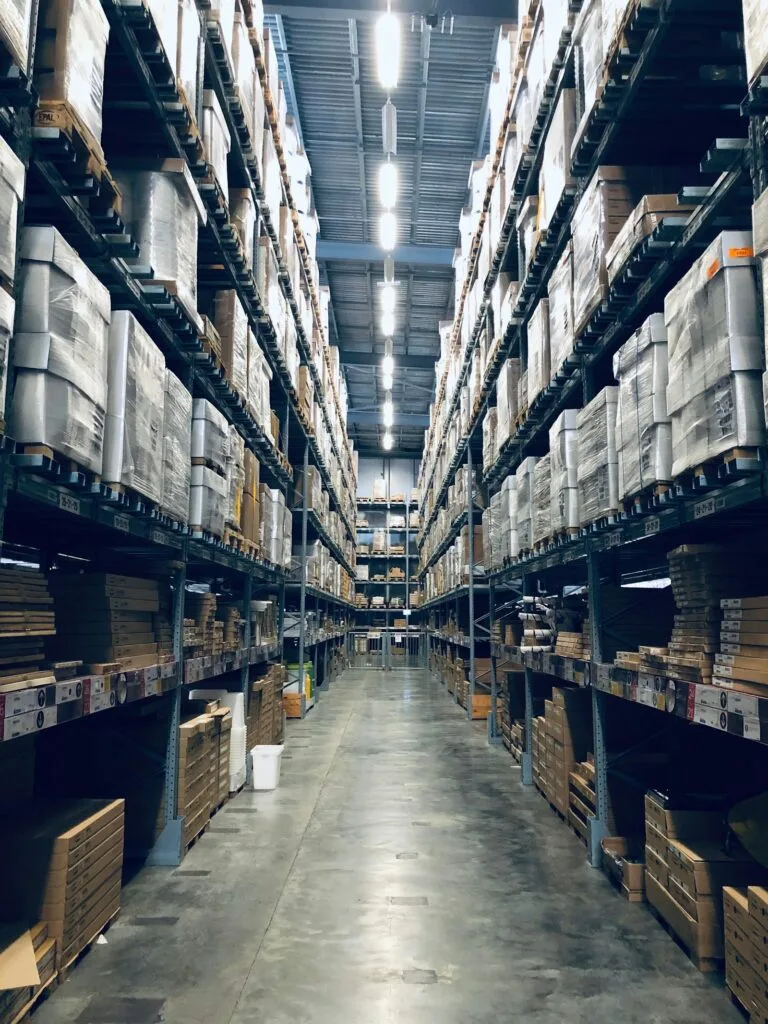
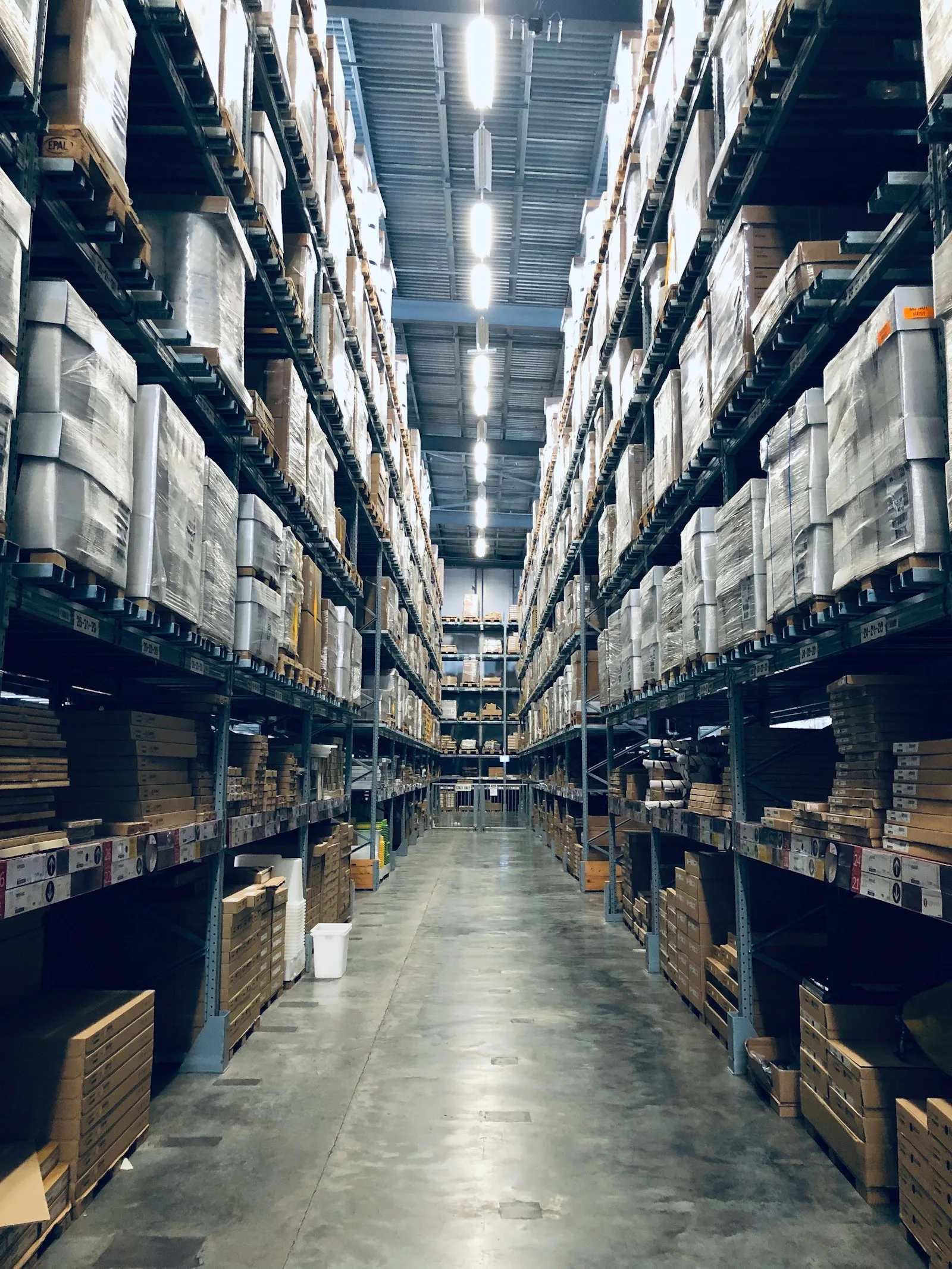
A parallel shift is happening at the physical layer. Robots on a warehouse floor are increasingly polyfunctional — capable of picking, sorting, and moving stock rather than being purpose-built for a single narrow task — offering genuine flexibility in environments facing real labour shortages. Combined with sensor-driven, AI-connected systems now commonly described as physical AI, this brings real-time sensing and automated execution directly into physical operations rather than confining automation to the software layer alone.
The businesses capturing genuine value here are the ones treating digital forecasting and physical execution as one connected system, not two separate technology programmes reporting to different parts of the organisation. A brilliant forecasting engine feeding into a warehouse still running on manual, disconnected processes captures only a fraction of the value either investment was meant to deliver.
Why Resilience Now Matters as Much as Efficiency
The last several years of genuine supply disruption have permanently shifted what “good” supply chain performance means. Pure cost and speed optimisation, the dominant lens for a generation of supply chain strategy, now sits alongside a genuine, board-level demand for resilience — the ability to absorb a shock, a supplier failure, a geopolitical disruption, without the entire operation stalling.
Autonomous systems are proving unusually well suited to this dual mandate, because a system capable of sensing and reacting in real time to a demand shift is, by the same underlying capability, better positioned to sense and react to a supply shock than a slower, purely human-driven planning cycle ever could be. Resilience and autonomy, once discussed as separate priorities, are increasingly the same investment viewed from two angles.
The Trust and Governance Question This Raises
Handing genuine decision authority to an autonomous system — approving a replenishment order, adjusting a supplier commitment — raises a governance question every organisation adopting this technology has to answer deliberately: within what boundaries can the system act alone, and at what threshold does a decision require a human back in the loop? Organisations that skip this question, enabling broad autonomous authority without clearly defined limits, are the ones most exposed when an autonomous decision goes wrong at a scale a purely manual process would never have reached before someone noticed.
What This Means for How Supply Chain Leaders Should Be Investing
Prioritise the sense-to-action loop, not forecast accuracy alone. The businesses capturing real value are shortening the distance between detecting a change and acting on it, not simply refining the prediction sitting upstream of an unchanged, slow manual process.
Treat physical and digital investment as one programme. Warehouse automation and forecasting software deliver disproportionately more value when designed and governed together than when pursued as separate initiatives with separate owners and separate success metrics.
Build resilience into the same system delivering efficiency. A well-designed autonomous system should be evaluated on how it handles disruption, not purely on how well it performs under normal, predictable conditions.
Define governance boundaries before granting autonomy, not after an incident. Clear, pre-agreed limits on what a system can decide alone, and when it must escalate, protect against the specific risk that autonomy without governance actually creates.
Why This Advantage Compounds
Autonomous supply chain capability isn’t a one-time efficiency gain that a competitor can simply match by buying similar software. It compounds — a system that’s been sensing, acting, and learning from real outcomes for two years genuinely outperforms one just switched on, in ways a competitor starting later has to spend real time catching up on rather than simply purchasing outright.
Why Middle-Market Manufacturers Are Adopting Faster Than Expected
Autonomous supply chain technology was, until recently, assumed to be primarily an advantage available only to the largest retailers and manufacturers with the scale to justify significant technology investment. That assumption is proving increasingly outdated as cloud-based, subscription-priced versions of this capability become accessible to considerably smaller operations, levelling a playing field that previously favoured scale alone. Mid-sized manufacturers adopting this capability early are finding it offsets some of the natural advantage larger competitors previously held purely through scale and negotiating power.
The Supplier Relationship Question This Raises
As more of the supplier negotiation and ordering process becomes automated, a genuine question emerges about what happens to supplier relationships built over years on personal trust and direct human communication. Organisations handling this well are using automation for the routine, repeatable transactions — standard reorders, predictable replenishment — while deliberately preserving direct human relationship management for genuinely strategic supplier decisions, rather than automating the relationship itself out of existence entirely.
What Happens When the Autonomous System Gets It Wrong
No autonomous system is error-free, and organisations deploying this technology need genuine incident response planning for when an automated decision goes wrong at scale — an autonomous reorder placed based on a data anomaly, a supplier negotiation conducted on outdated pricing information. Building this response capability before an incident occurs, rather than improvising once one happens, is a distinguishing factor between organisations that recover quickly from an inevitable autonomous system error and those that suffer disproportionate, prolonged damage from what should have been a contained, quickly correctable mistake.
What This Means for Trade and Tariff Complexity
Autonomous supply chain systems are increasingly being asked to factor in genuinely volatile trade and tariff conditions directly into sourcing and routing decisions, adjusting supplier selection and shipping routes in near real time as conditions shift, a capability considerably beyond what manual planning processes could realistically sustain given how quickly these conditions can now change. This is becoming one of the more compelling practical justifications for autonomous capability beyond pure cost efficiency, in an environment where trade conditions have become genuinely less predictable than in previous decades.
The Data Sharing Trust Problem Between Trading Partners
Genuinely effective autonomous coordination across a supply chain requires a level of data sharing between trading partners that many businesses remain understandably cautious about, worried about competitive information leaking to a supplier who also serves direct competitors. Building the trust and technical safeguards needed for this genuine cross-organisational data sharing, without exposing commercially sensitive information inappropriately, remains one of the more difficult unsolved problems in scaling autonomous supply chain coordination beyond a single organisation’s internal operations.
Why This Technology Is Also Reshaping Warehouse Real Estate Strategy
As autonomous systems change what a warehouse actually needs to function efficiently — different power requirements, different layout considerations to accommodate flexible robotics, different connectivity infrastructure — commercial real estate decisions around warehousing are increasingly factoring in this technology readiness directly, with genuinely automation-ready facilities commanding a premium over older facilities requiring significant retrofit investment before they can support modern autonomous operations.
How Weather and Climate Volatility Are Becoming a Core Planning Input
Increasingly unpredictable weather patterns are becoming a genuine, quantifiable input into autonomous supply chain planning, with systems now expected to anticipate and route around weather-related disruption proactively rather than reacting once a disruption has already halted a shipment or delayed a delivery. This represents a genuine expansion of what supply chain planning systems are expected to account for, beyond the traditional core variables of cost, demand, and lead time alone.
Why Smaller Suppliers Are Being Asked to Integrate With Larger Customers’ Systems Directly
As large retailers and manufacturers build increasingly autonomous supply chain systems, they’re extending pressure down to smaller suppliers to integrate directly with these systems — sharing real-time inventory and production data rather than the periodic, manually updated reporting that sufficed in an earlier era. Smaller suppliers unable or unwilling to build this integration capability are finding themselves at a genuine competitive disadvantage in retaining relationships with larger customers increasingly building their own operations around this level of real-time visibility.
What Happens to Contingency Planning When Systems Are This Fast
Ironically, faster, more autonomous decision-making can create new fragility if organisations remove human contingency planning entirely, assuming the system’s speed alone is sufficient protection against disruption. The organisations managing this best maintain genuine human-reviewed contingency plans for major disruption scenarios, treating autonomous systems as the primary response mechanism for routine variation while preserving deliberate, human-led planning for the genuinely severe, low-frequency events an autonomous system has never encountered before.
What Happens When Two Autonomous Systems From Different Companies Interact
As autonomy spreads across an industry, a genuinely novel situation is emerging with increasing frequency: one company’s autonomous procurement system negotiating directly with another company’s autonomous sales system, each optimising for its own side’s interest without a human present in the exchange at all. Early experience with this kind of machine-to-machine negotiation suggests outcomes can diverge meaningfully from what equivalent human negotiators would have reached, and organisations are still developing genuine confidence in how to audit and validate that these automated negotiations are actually producing fair, intended outcomes for both sides.
Why Some Regions Are Moving to Regulate This Directly
Several regulatory bodies have begun exploring specific rules around autonomous commercial decision-making in supply chains, particularly concerning algorithmic pricing coordination that could inadvertently function like price-fixing even without any explicit human intent to collude. Businesses deploying autonomous pricing and negotiation capability need genuine legal review of how these systems could be perceived under competition law, a consideration barely relevant to earlier generations of simpler, more clearly human-directed automation.
What separates organisations genuinely capturing this advantage from those merely experimenting is the discipline to treat autonomy, resilience, and governance as one integrated system, rather than three separate initiatives pursued in isolation from each other.
Why Last-Mile Delivery Remains the Hardest Problem to Fully Automate
While upstream supply chain decisions — forecasting, replenishment, supplier negotiation — have moved considerably toward autonomy, last-mile delivery remains stubbornly resistant to full automation in most markets, constrained by regulatory restrictions on autonomous vehicles, genuine infrastructure limitations, and the sheer unpredictability of real-world delivery environments compared to the more controlled conditions inside a warehouse or distribution centre. Organisations investing heavily upstream while treating last-mile as an unavoidable manual bottleneck are, realistically, making the correct near-term allocation of automation investment given where the technology and regulatory environment genuinely stand today.
How Smaller Retailers Are Pooling Resources to Access This Capability
Recognising that individual smaller retailers often lack the scale to justify building autonomous supply chain capability independently, a growing number are pooling resources through shared logistics cooperatives and consortium arrangements, collectively accessing sophisticated forecasting and automation capability that would be uneconomical for any single smaller retailer to build alone. This collaborative model is proving to be a genuine pathway for smaller players to remain competitive against larger, better-resourced rivals building equivalent capability independently.
What Happens to Traditional Supply Chain Planning Roles
The traditional demand planner role, historically focused on producing and defending a forecast, is evolving considerably as autonomous systems take over much of the routine forecasting and replenishment work itself. The role increasingly shifts toward exception management and system oversight — understanding why an autonomous system made a specific decision, validating that the underlying logic remains sound as conditions change, and intervening in the genuinely novel situations the system hasn’t encountered before, a meaningfully different skill set than traditional forecasting expertise alone provided.
What a Genuinely Mature Autonomous Supply Chain Looks Like in Practice
Organisations furthest along this journey describe a genuinely different daily operating rhythm than even a well-run traditional supply chain — planners spending their time reviewing exception reports and refining the system’s decision parameters rather than manually working through routine replenishment decisions one at a time, with the system handling the high-volume, routine work reliably enough that genuine human attention concentrates almost entirely on the exceptions and strategic decisions that actually warrant it.
Why Some Sectors Are Building Shared Autonomous Infrastructure
In sectors where individual companies lack the scale to justify building fully autonomous supply chain infrastructure independently, industry-wide shared platforms are emerging, pooling data and automated decision-making capability across multiple, sometimes even competing, businesses within the same sector. This collaborative model raises genuine questions about competitive information sharing that participating businesses need to navigate carefully, but it’s proving to be a genuine pathway for smaller players in fragmented industries to access capability that would otherwise remain the exclusive advantage of only the largest, best-resourced competitors.
What a Realistic Five-Year Outlook Looks Like for Most Businesses
Rather than expecting full autonomous transformation within a short window, the more realistic trajectory most businesses should plan around is incremental, sequenced expansion of autonomous decision-making across an increasing share of supply chain functions over several years, with genuine governance and trust built progressively at each stage rather than attempted all at once in a single, ambitious transformation programme carrying considerably more execution risk than a staged approach.
The compounding advantage available to early, deliberate adopters in this space is genuinely significant, and the window for building it before it becomes simply table stakes across an entire industry is narrowing more quickly than many leadership teams currently appreciate.
A Final Reflection on Resilience as the Ultimate Test
The truest test of any autonomous supply chain investment isn’t how efficiently it performs under normal conditions — it’s how it behaves the next time genuine disruption arrives, and the organisations building this capability with that eventual test in mind, rather than optimising purely for today’s stable conditions, are the ones building something that will still be delivering genuine value when circumstances inevitably become less predictable.
Autonomy without resilience is fragility wearing an impressive dashboard. The businesses building both together are the ones genuinely prepared for whatever the next disruption turns out to be.
Why Board Reporting on Supply Chain Now Needs a Genuinely Different Shape
Traditional supply chain board reporting concentrated heavily on cost and service level metrics, reviewed on a quarterly cadence well suited to a slower-moving, more manually managed supply chain. As decision-making shifts toward genuine real-time autonomy, board oversight needs a correspondingly different shape — less about reviewing a quarterly summary after the fact, and more about genuine confidence in the governance boundaries and escalation triggers built into the system generating decisions continuously, every day, often without any single decision ever crossing a human’s desk for individual review at all.
A Last Word on Sequencing This Investment Wisely
For organisations just beginning this journey, the temptation to pursue full autonomy immediately across every function is understandable but rarely wise. The organisations building the most durable capability start with a single, well-bounded function, prove genuine value and genuine governance discipline there, and expand deliberately from that proven foundation — a considerably more resilient path than attempting comprehensive transformation everywhere at once, which spreads both attention and risk more thinly than most organisations can genuinely manage well.
That’s the genuine test worth planning around, not the smoother, more predictable conditions any system can handle comfortably.
Why This Investment Rarely Shows Its Full Value in Year One
Organisations evaluating autonomous supply chain investment purely on first-year return frequently undervalue it, since much of the genuine benefit compounds over a longer horizon as the system accumulates real operational data and refines its own decision-making through actual experience, rather than delivering its full value immediately upon initial deployment. Patient evaluation, extended beyond a single budget cycle, tends to tell a considerably more accurate story than an early snapshot alone ever could.
How Kingacademic Helps Businesses Navigate This Shift
For manufacturing, retail, and distribution clients, helping leadership think through exactly where autonomous decision-making genuinely belongs in their specific operation — and where genuine human judgement still needs to sit firmly in the loop — has become a core part of the market and operating model planning work we do, distinct from simply recommending the latest available technology without that governance thinking built in first.