
From Factory Floor to Full Pipeline: A Garment Manufacturer’s B2B and B2C Growth Story

From Factory Floor to Full Pipeline: How a Garment Manufacturer Opened Both B2B and B2C Revenue Channels
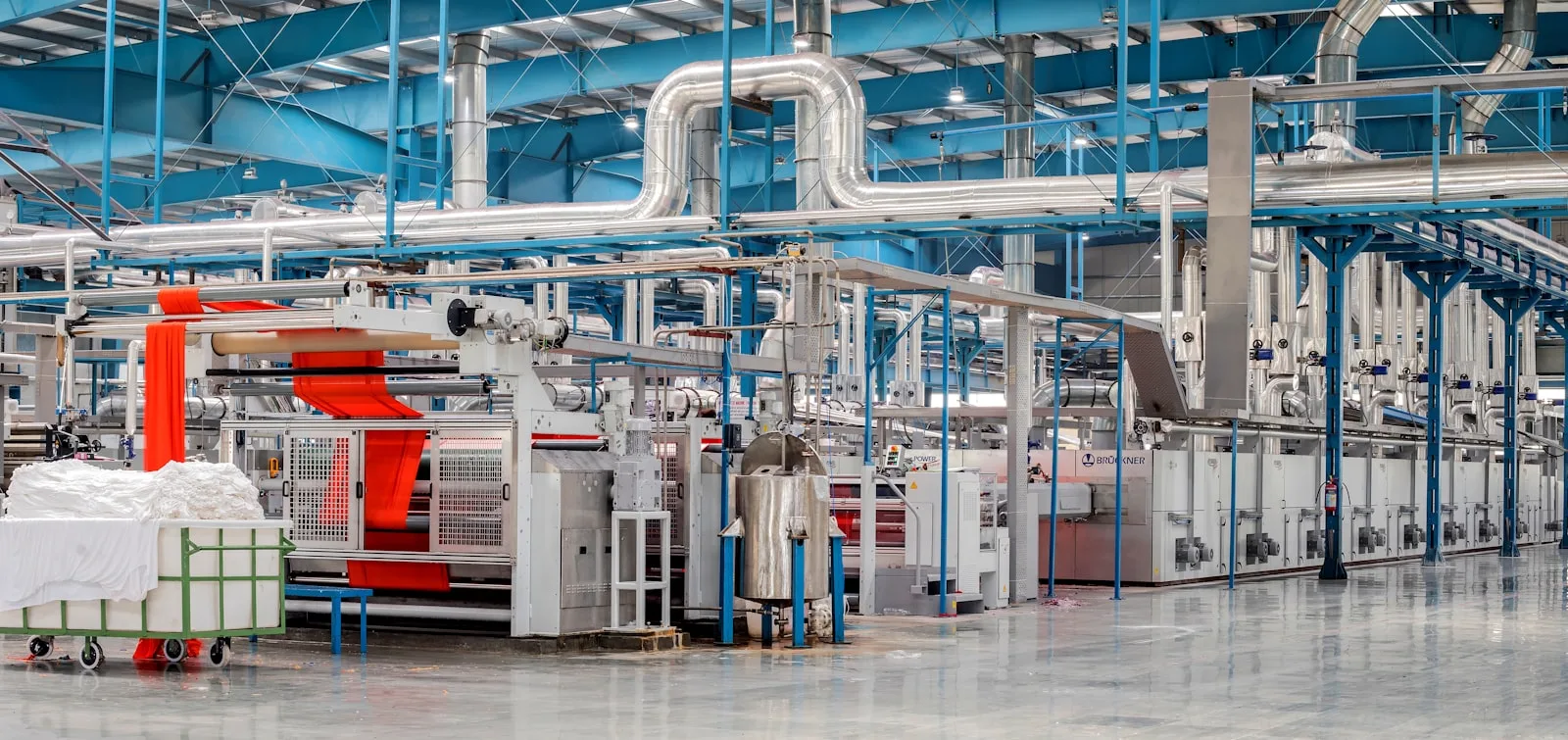
The apparel manufacturing sector occupies an unusual position in the marketing world. For decades, growth in this industry depended almost entirely on trade relationships, buyer agent networks, and word-of-mouth reputation built over years of reliable production. Marketing, in the conventional sense, barely entered the picture. That model is quietly breaking down. Buyers now research manufacturing partners online before ever picking up the phone, and a growing share of apparel businesses are discovering that the same production capability that serves wholesale buyers can also serve a direct-to-consumer audience, if the go-to-market approach is built properly.
This is the exact challenge Kingacademic was brought in to address for a mid-sized garment manufacturer looking to grow in two directions simultaneously: securing more stable, higher-value B2B contracts with retail and wholesale buyers, while also testing whether the brand’s own production capability could support a direct-to-consumer line sold straight to end customers.
The Starting Position
Like much of the sector, the client’s existing growth engine relied almost entirely on referral and long-standing buyer relationships. There was no structured pipeline, no consistent digital presence capable of supporting cold outreach, and no attempt whatsoever at consumer-facing sales. Research into the UK apparel manufacturing sector consistently shows that digital marketing adoption across the industry remains uneven, with search engine optimisation and visual platforms like Instagram and Pinterest identified as particularly underused levers for manufacturers who have historically competed on relationships and price alone rather than visibility.
This gap represented genuine opportunity. A manufacturer with real production capability but weak digital visibility is, in effect, invisible to an entire category of buyer who now begins their supplier search online rather than at a trade show.
Building the B2B Pipeline First

The B2B side of the engagement followed the same pipeline marketing structure Kingacademic applies across manufacturing and industrial clients: mapping the actual buyer journey of a wholesale or retail buyer evaluating a new manufacturing partner, then building content and outreach around each stage of that journey rather than relying purely on trade show attendance and inherited relationships.
Buyer research consistently shows that B2B purchasing decisions are now made largely before a supplier is ever contacted directly, with research indicating that buyers typically complete the majority of their evaluation independently before reaching out. For a manufacturer, this meant the website needed to function as a genuine sales asset rather than a static brochure — clear capability statements, certifications, minimum order quantities, and capacity information all needed to be visible and structured for the specific questions a procurement buyer, a merchandiser, and a senior decision-maker would each be asking during their independent research phase.
Alongside the website rebuild, a structured outbound and content programme targeted specific buyer segments the client had identified as high-value but underpenetrated — mid-market fashion retailers seeking a more reliable alternative supplier, and smaller design-led labels needing smaller minimum order runs than the client’s existing buyer base typically required. Content built specifically around these segments’ actual concerns — ethical sourcing documentation, sample turnaround time, smaller batch flexibility — positioned the manufacturer to be found and seriously considered during exactly the independent research phase most buyers now go through before ever making contact.
Opening a Genuine B2C Channel

The consumer-facing side of the engagement required a genuinely different approach, applying the same B2C growth funnel framework Kingacademic uses across direct-to-consumer clients — mapping awareness, acquisition, conversion, retention, and referral as one connected system, rather than treating a new consumer line as simply “another sales channel” bolted onto existing B2B operations.
The apparel category is particularly well suited to visual-first platforms, and industry research consistently identifies Instagram and Pinterest as especially effective for clothing brands given their inherently visual nature, well suited to showcasing design and craftsmanship in a way that resonates with an audience evaluating both product and the story behind it. For a manufacturer stepping into consumer-facing sales for the first time, this meant building an entirely new content muscle — showing the making process, the factory itself, and the craftsmanship behind each piece, turning what had previously been an invisible operational backend into the actual selling point of the consumer proposition.
Conversion infrastructure — a genuinely functional ecommerce storefront, checkout optimisation, and the early retention mechanics needed to support a repeat-purchase apparel business — were built alongside this content programme, ensuring that new consumer-facing demand had somewhere reliable and conversion-ready to land rather than simply generating interest with no infrastructure behind it.
Running Both Channels Without Confusing the Operation
A recurring risk when a manufacturer opens a consumer channel alongside its existing wholesale business is operational and brand confusion — production capacity gets contested between channels, and messaging built for a procurement buyer bleeds awkwardly into messaging meant for an individual consumer. Part of the engagement focused specifically on separating these two identities clearly, while ensuring the underlying data and reporting infrastructure remained connected, so leadership could see both channels’ genuine contribution to the business on one coherent dashboard rather than through two disconnected reporting systems.
What Changed
On the B2B side, the manufacturer moved from a pipeline built almost entirely on inherited relationships to one with a genuine, trackable inbound flow of qualified buyer enquiries, sourced directly from the specific content and positioning built around the buyer segments identified early in the engagement. Buyers were, for the first time, arriving having already done substantial research into the manufacturer’s capability and certifications, meaningfully shortening the sales conversation that followed.
On the consumer side, the new direct-to-consumer line moved from a completely untested idea to a functioning, if still early-stage, revenue channel with its own acquisition, conversion, and early retention data — giving leadership genuine evidence, for the first time, of whether consumer-facing demand for the brand’s own production existed at meaningful scale, rather than relying on assumption alone.
The Broader Lesson for Manufacturing Businesses
What this engagement demonstrated, and what we see consistently across manufacturing clients, is that production capability and market visibility are two entirely separate capabilities that most manufacturers have never had to build in tandem. A factory can have exceptional capability and remain functionally invisible to exactly the buyers, wholesale or consumer, who would value it most, simply because nobody has ever built the pipeline connecting the two. For manufacturers sitting on real capability but limited visibility, the opportunity in front of them is often larger than they assume — but only once someone builds the actual infrastructure connecting that capability to the market.
Why Timing the Two Channels Mattered
One of the earliest strategic decisions in this engagement was sequencing, not simultaneity. It would have been tempting to launch both the B2B repositioning and the new consumer line at the same time, but doing so would have split limited internal attention across two entirely different buyer psychologies at once — a procurement buyer evaluating certifications and capacity, and an individual consumer responding to story and visual appeal. The B2B foundation was deliberately built first, both because it protected the client’s existing core revenue and because the operational discipline required to serve a stricter B2B buyer — clean documentation, reliable capacity reporting, consistent quality communication — created infrastructure the consumer launch could later borrow from rather than building twice.
This sequencing decision reflects a broader principle in how Kingacademic approaches manufacturing clients considering a consumer expansion: the B2C opportunity is real, but it should rarely be the first thing built, because a manufacturer’s core credibility with existing and prospective B2B buyers is the foundation the entire business still depends on, and that foundation deserves to be strengthened, not diluted, by a new consumer initiative launched too early or too loudly.
The Content Challenge Unique to Manufacturing

Manufacturing businesses face a specific content challenge that pure retail or service brands don’t: much of what makes the business genuinely credible — quality control processes, factory conditions, production capability — has traditionally been treated as operationally private rather than as marketing material. Convincing a manufacturing client to open up this side of the business to a camera, and to a public audience, required real internal culture change, not just a content calendar.
The eventual approach treated the factory floor itself as the primary content asset, rather than trying to compete with pure lifestyle or fashion brands on aspirational imagery the client had no authentic claim to. Genuine footage of the making process, the specific skill of individual machinists, and the physical reality of how a garment actually comes together consistently outperformed any attempt at more conventional, polished fashion marketing, because it offered something a pure retail competitor simply couldn’t authentically show — the actual manufacturing process behind the product.
Handling the Internal Skepticism
It’s worth being honest about a part of this kind of engagement that rarely appears in case study write-ups: internal resistance. A production-focused leadership team, accustomed to relationships and referral as the entire growth engine, is often genuinely skeptical that content, SEO, or a consumer Instagram presence will produce anything a trade show relationship hasn’t already delivered for years. Overcoming this required treating the first ninety days as a deliberately small, closely measured pilot — a defined set of buyer segments, a defined content cadence, and specific, agreed metrics reviewed together every two weeks — rather than asking for a leap of faith into an unfamiliar, larger commitment from day one.
This measured approach mattered as much to the engagement’s eventual success as any individual tactic. Manufacturing leadership teams are, understandably, run by people who trust what they can verify directly. Building trust in a new growth channel required treating that skepticism as reasonable, not as an obstacle to route around, and letting early, honestly reported results do the persuading rather than a confident pitch alone.
What We’d Tell Another Manufacturer Considering This Path
For any manufacturing business weighing a similar dual expansion — strengthening B2B visibility while testing a direct consumer channel — the clearest lesson from this engagement is that neither channel should be treated as a smaller, lower-effort version of the other. A B2C funnel built with B2B thinking underperforms because it misses the emotional, visual, story-led nature of consumer buying decisions. A B2B pipeline built with consumer marketing instincts underperforms because it underestimates how methodical, evidence-based, and multi-stakeholder a genuine procurement decision actually is. Respecting the genuine differences between these two buyer journeys, while still connecting them operationally under one coherent business, is the core discipline this kind of engagement actually requires.
The Data Question That Almost Derailed the Consumer Launch
Roughly six weeks into the consumer-facing build, an internal data review raised a genuine concern: early social engagement was strong, but on-site conversion from that engagement was disappointing, well below what the paid and organic traffic volume should have produced. Rather than assuming the funnel itself was fundamentally flawed, the team ran a structured diagnostic — checking each stage from ad click through to completed purchase individually — and found the actual problem sitting in a single, specific place: mobile checkout, where a significant share of visitors were dropping off at the payment step due to a technical friction issue with the payment gateway integration that had gone unnoticed because desktop testing had looked fine throughout.
This diagnostic discipline mattered more to the eventual outcome than any single piece of creative content. A less rigorous approach might have concluded the audience simply wasn’t interested, cut the consumer initiative early, and missed what was actually a fixable technical problem sitting quietly in the middle of an otherwise well-performing funnel.
How the Two Audiences Actually Cross-Pollinated
An unexpected benefit emerged roughly four months into the engagement: several B2B buyers, having discovered the manufacturer’s new consumer-facing content while researching the company as a potential supplier, specifically cited the visible craftsmanship shown in that content as a factor increasing their confidence in the manufacturer’s production quality. This cross-pollination wasn’t originally planned, but it reinforced a broader principle worth naming explicitly — content built honestly for one audience can meaningfully strengthen credibility with a completely different audience, provided the underlying story being told is genuinely consistent across both.
Measuring Success Across Two Different Timeframes
A genuine complication in reporting on this engagement to leadership was reconciling two fundamentally different measurement timeframes — B2B pipeline results that would only fully mature over many months given typical manufacturing procurement cycles, against B2C funnel results that produced meaningful, actionable data within weeks. Presenting both honestly, without artificially compressing the B2B timeline to match the faster-moving consumer data, was essential to maintaining leadership’s genuine trust in the reporting throughout the engagement, even during the inevitable early weeks when the B2B pipeline showed activity but not yet closed deals.
How the Content Calendar Was Actually Built
Rather than a generic weekly posting schedule, the content calendar for both the B2B and B2C sides was built backwards from specific buyer questions gathered directly from the client’s own sales team and, on the consumer side, from early customer service enquiries during the soft launch period. Every piece of content had a specific, named purpose — addressing a specific objection, answering a specific question a real prospect had actually asked — rather than existing simply to fill a calendar slot. This discipline meant the content library grew more slowly than a volume-driven approach might have produced, but each piece carried genuine, demonstrated relevance rather than being a generic industry post that could have been published by any competitor.
The Supplier Certification Content That Became a Genuine Differentiator
One specific content initiative deserves particular mention: a detailed, transparent breakdown of the client’s ethical sourcing and certification documentation, published as a dedicated resource rather than buried in a generic “About Us” page. This single piece of content became disproportionately important to the B2B pipeline, repeatedly cited by prospective buyers during discovery calls as the reason the manufacturer had made their shortlist over competitors offering similar pricing and capability but far less transparency about their sourcing practices. It’s a reminder that in a sector where buyers are increasingly scrutinising ethical sourcing, genuine transparency published proactively can function as a more powerful differentiator than almost any conventional marketing claim.
How the Consumer Line’s Pricing Strategy Evolved
Initial pricing for the consumer line was set conservatively, based on comparable competitor products, but early conversion data revealed the brand’s genuine story and craftsmanship narrative supported a meaningfully higher price point than the initial conservative estimate had assumed. A structured pricing test, run carefully to avoid disrupting early customer trust, confirmed this and led to a considered price increase roughly three months into the consumer launch — a decision informed directly by genuine willingness-to-pay data rather than guesswork, and one that meaningfully improved the unit economics of the entire consumer channel going forward.
Training the Client’s Team to Sustain the Programme Independently
A deliberate part of this engagement, consistent with Kingacademic’s broader approach, involved training members of the client’s own team to eventually manage significant parts of the ongoing content and campaign programme independently, rather than building permanent, indefinite external dependency. This included structured handover documentation, recorded training sessions covering the reasoning behind key strategic decisions, and a gradually reducing level of direct involvement as the client’s internal capability grew, ensuring the systems built during the engagement would continue to function and evolve well beyond the initial engagement period itself.
Looking Ahead: What This Manufacturer Is Building Toward Next
With both channels now functioning on genuinely separate but connected infrastructure, the client’s next strategic horizon involves testing international B2C expansion into a small number of adjacent markets, using the domestic consumer channel’s proven unit economics as the foundation for that expansion case, while continuing to deepen the B2B pipeline into additional buyer segments identified but not yet fully pursued during the initial engagement phase. This kind of staged, evidence-based expansion, building each subsequent phase on proven data from the last rather than a fresh leap of faith, reflects the broader discipline this entire engagement was built around from its earliest planning stages.
The Role of Paid Media in Accelerating Both Channels
While organic content formed the foundation of this engagement, a modest, carefully targeted paid media layer accelerated results on both sides once the organic foundation had proven which messages and audiences actually converted. On the B2B side, this meant targeted LinkedIn campaigns reaching specific job titles at identified prospect companies, informed directly by which organic content those same buyer personas had already engaged with most. On the B2C side, paid social amplified the strongest-performing organic content to lookalike audiences, rather than testing entirely new creative concepts with paid budget before organic testing had already validated what genuinely resonated.
Handling a Genuine Supply Chain Disruption Mid-Engagement
Roughly midway through the engagement, a genuine external supply chain disruption affecting raw material costs required an honest, transparent adjustment to both B2B and B2C messaging around pricing and lead times. Rather than avoiding the topic, the content strategy addressed it directly and proactively, communicating the situation clearly to both existing and prospective customers before it became a source of frustration discovered only at the point of an unexpected quote or delay. This transparent handling of a genuinely difficult operational moment reinforced trust with both audiences rather than damaging it, consistent with the broader pattern this engagement had already established around honest, specific communication over vague reassurance.
Taken together, these results gave the client something considerably more valuable than a single successful campaign: genuine, durable infrastructure spanning both sides of the business, built to keep compounding in value for years to come rather than fading once the initial engagement concluded.
How Kingacademic Approaches This
This dual-channel approach — building a genuine B2B pipeline while opening a properly structured B2C funnel alongside it — is one of the recurring engagement types we run for manufacturing and production businesses. It draws directly on the frameworks taught in our B2B Pipeline Marketing and B2C Growth Funnel Marketing programmes, applied directly to the client’s specific operation rather than as generic theory.