
Manufacturing’s Next Chapter Isn’t About Removing People From the Factory Floor
Insight · 8-minute read
Manufacturing’s Next Chapter Isn’t About Removing People From the Factory Floor. It’s About What Happens When Machines Finally Understand Context.
In brief
- Manufacturing is moving beyond pure automation efficiency toward systems that combine human judgement with AI-driven sensing and decision-making — often described as Industry 5.0.
- Physical AI, combining sensors, robotics, and real-time reasoning, is bringing genuine adaptability to environments that previously required rigid, pre-programmed automation.
- The manufacturers gaining real advantage are redesigning roles around this collaboration, not simply layering AI on top of an unchanged production line.
The automation wave that reshaped manufacturing over previous decades was fundamentally about removing variability — rigid, pre-programmed machines doing exactly the same task, exactly the same way, as fast and consistently as possible. That model delivered enormous efficiency gains, and it also had a hard limit: it worked only in tightly controlled, predictable conditions, and struggled badly the moment reality diverged from the script.
What’s emerging now is a genuinely different model, sometimes called Industry 5.0 to distinguish it from the pure automation focus of Industry 4.0 that preceded it — manufacturing systems designed around collaboration between human judgement and AI-driven machines capable of sensing, reasoning, and adapting in real time, rather than simply executing a fixed programme regardless of what’s actually happening on the floor.
Why Rigid Automation Hit a Genuine Ceiling
Pure automation excels at repetition and struggles with genuine variability — a part slightly out of tolerance, an unexpected material defect, a genuinely novel situation the original programming never anticipated. For decades, the practical answer was simply removing this variability wherever possible, standardising inputs so rigid automation could handle them reliably. That approach works, but it also constrains what can be automated to only the most standardised, predictable parts of a production process, leaving considerable manual work sitting exactly where genuine variability remains unavoidable.
What Physical AI Actually Changes
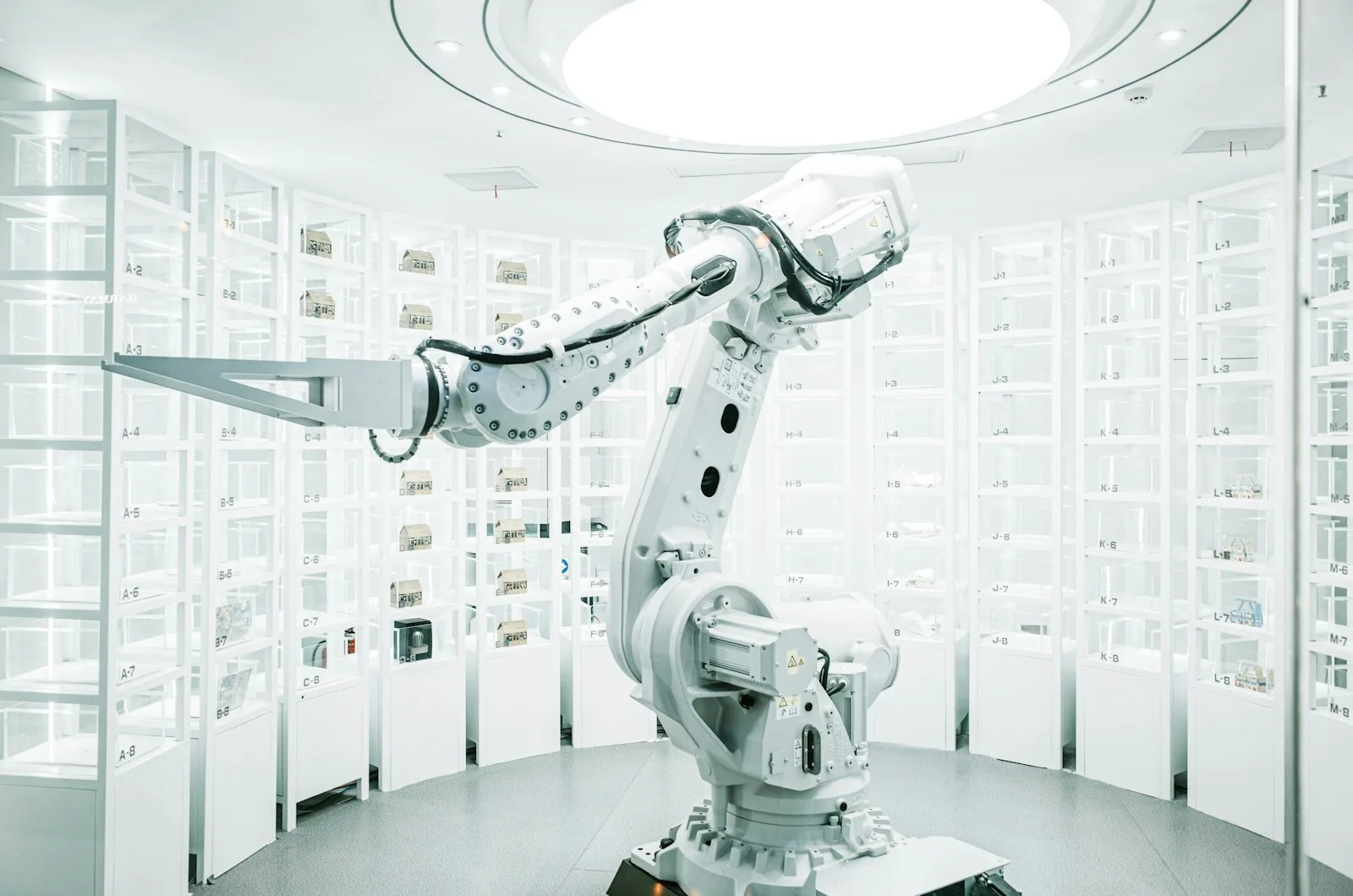
Physical AI — combining AI reasoning capability with sensors, robotics, and real-time perception directly in physical operations — is extending what automation can handle into precisely this previously unreachable territory. A robotic system that can perceive a part’s actual condition, reason about how to handle a deviation from the expected standard, and adjust its approach accordingly, rather than simply failing or requiring a human to intervene, extends automation’s reach into work that previously required a human’s adaptive judgement by necessity.
This is also driving genuine growth in polyfunctional robotics — systems capable of switching between several distinct tasks rather than being purpose-built for one narrow function alone, offering manufacturers considerably more flexible capacity in an environment where labour availability, particularly for repetitive physical work, remains a genuine, persistent constraint across much of the sector.
Why This Requires Genuinely Redesigning Roles, Not Just Installing New Equipment
The manufacturers capturing real advantage from this shift aren’t simply installing more capable robots into an unchanged production line and expecting the gains to follow automatically. They’re genuinely redesigning roles around the new collaboration this technology enables — shifting human attention toward oversight, exception handling, and the genuinely judgement-heavy decisions that remain firmly human, while the technology absorbs a wider range of the routine and moderately variable work that previously required manual intervention purely because rigid automation couldn’t handle the variability involved.
This redesign is real organisational change work, not a procurement decision. Training, role definitions, and even how performance gets measured on a production floor all need genuine rethinking when the boundary between human and machine work shifts this substantially, and manufacturers treating this purely as an equipment upgrade consistently see weaker results than those treating it as the organisational change it genuinely is.
The Business Model Question Sitting Behind the Technology
For many manufacturers, this technological shift is arriving alongside a parallel strategic question about business model — whether the same increased visibility and control this technology provides over production could support a shift toward outcome-based or service-backed offerings, rather than pure product sale, extending the value of increased operational visibility beyond internal efficiency into a genuinely new commercial relationship with customers as well.
What Manufacturers Should Prioritise
Target physical AI at genuine variability, not just repetition. The technology’s real advantage over previous automation is handling deviation and exception — deploying it purely for tasks rigid automation already handled well captures a fraction of its potential value.
Redesign roles deliberately, not incidentally. The organisational and workforce planning work behind this shift matters as much as the technology procurement decision itself.
Build genuine data infrastructure to support real-time decision-making. Physical AI depends on genuine, reliable sensor and data infrastructure — gaps here undermine the technology’s ability to reason accurately about real conditions on the floor.
Consider the business model implications alongside the operational ones. Increased production visibility and control can support commercial innovation, not just internal efficiency gains, for manufacturers willing to think beyond the factory floor itself.
Why Data Quality Determines Whether Physical AI Actually Works
Physical AI systems reasoning about real-time conditions on a production floor are only as reliable as the sensor data feeding them, and manufacturers with inconsistent, poorly maintained sensor infrastructure find that even genuinely capable AI reasoning struggles to compensate for fundamentally unreliable underlying data. Investing in genuine data quality and sensor infrastructure maintenance is, somewhat unglamorously, as important to this technology’s success as the AI capability itself, and considerably less exciting to budget for than the AI systems it supports.
How This Affects Workforce Planning Over a Longer Horizon
The workforce implications of this shift are genuinely more nuanced than a simple headcount reduction narrative suggests — some roles genuinely reduce in required headcount as automation absorbs more variable work, while entirely new roles emerge around overseeing, training, and maintaining these more sophisticated systems, requiring different skill than either the fully manual roles or the previous generation of rigid automation maintenance ever required. Manufacturers planning workforce transitions well ahead of deployment, rather than reactively once the technology is already in place, manage this transition with considerably less internal disruption and resistance.
Why Smaller Manufacturers Shouldn’t Assume This Is Out of Reach
Physical AI and polyfunctional robotics were initially the domain of only the largest manufacturers with capital to invest in cutting-edge automation. As with autonomous supply chain technology, increasingly accessible, modular versions of this capability are reaching smaller manufacturers faster than the previous generation of automation technology ever did, narrowing a competitive gap that previously favoured scale alone rather disproportionately.
What This Means for Where New Manufacturing Investment Is Actually Landing
Investment decisions about where to locate new manufacturing capacity are increasingly factoring in this technology’s ability to offset labour availability constraints, making regions previously considered less competitive due to labour shortages more viable for new investment than pure labour cost comparison alone would have suggested in an earlier era of manufacturing location strategy.
How This Technology Is Changing Supplier Qualification Standards
As physical AI and connected sensor infrastructure become more common on production floors, large customers are increasingly building technology readiness directly into their supplier qualification criteria, expecting genuine real-time production visibility and quality data from key suppliers as a condition of the relationship, not simply a nice-to-have — a trend likely to accelerate as more of the supply chain adopts this capability and treats its absence as a genuine competitive weakness in a supplier relationship.
How This Is Reshaping Vocational Training and Apprenticeship Programmes
Vocational training providers and apprenticeship programmes are having to update curricula considerably faster than in previous eras to keep pace with the genuinely different skill set this generation of manufacturing technology requires, moving well beyond traditional mechanical and electrical skill toward genuine comfort working alongside sensor-driven, AI-assisted systems that behave quite differently from the more predictable, purely mechanical equipment earlier training programmes were built around.
Why Regional Manufacturing Clusters Are Adapting at Different Speeds
Adoption of this technology varies considerably by regional manufacturing cluster, with regions already possessing strong existing automation infrastructure and technical talent pools adapting considerably faster than regions building this capability more from scratch, suggesting the competitive gap between advanced and less advanced manufacturing regions may widen further before any convergence, absent deliberate regional investment to close it.
What Happens to Quality Control as Machines Take On More Judgement
Traditional quality control processes were built around statistical sampling of a relatively predictable, human-executed production process. As physical AI systems take on more adaptive, judgement-involving work, quality control processes need genuine rethinking — verifying not just final product quality but the reasoning process behind adaptive decisions the system made along the way, a meaningfully more complex quality assurance challenge than sampling final output alone ever required.
Why This Technology Is Reviving Interest in Domestic Manufacturing
The labour-cost advantage that drove decades of manufacturing offshoring is partially offset when a considerable share of production can be handled by adaptable automation rather than manual labour, and several manufacturers are citing this technology directly as a factor in reconsidering domestic or nearshore production that would have been considered uncompetitive purely on labour cost grounds even five years ago.
Manufacturing’s next competitive advantage belongs to organisations willing to redesign roles and workflows around genuine human-machine collaboration, not simply those willing to spend the most on the newest available equipment.
Why Digital Twin Technology Is Becoming a Genuine Prerequisite
Effective physical AI deployment increasingly depends on genuine digital twin infrastructure — a detailed, continuously updated virtual model of the actual physical production environment — allowing new automation approaches to be tested and refined virtually before genuine physical deployment, considerably reducing the risk and cost of getting a physical deployment wrong on the first attempt. Manufacturers without mature digital twin capability are finding physical AI deployment considerably more expensive and error-prone than those who invested in this foundational digital infrastructure first.
How This Technology Is Affecting Product Design Itself, Not Just Production
Beyond production efficiency, genuine real-time production data and physical AI capability is beginning to influence product design decisions directly, with design teams increasingly able to see, in near real time, exactly how a specific design choice affects production complexity and cost, closing a feedback loop between design and manufacturing that traditionally involved considerably longer, more disconnected iteration cycles between separate design and production functions.
Why This Technology Is Reshaping Supplier Negotiations Around Capital Equipment
As physical AI and connected manufacturing systems become more standard, negotiations with capital equipment suppliers increasingly focus on data portability and integration openness, not just the traditional considerations of price and mechanical specification alone, reflecting how much of this equipment’s genuine long-term value now depends on how well it integrates into a manufacturer’s broader digital and AI infrastructure rather than its standalone mechanical capability in isolation.
A Final Word on Why This Shift Rewards Patience Over Speed
Across every manufacturer studied in this transition, the ones capturing the most durable advantage were rarely the fastest to deploy the newest available technology — they were the ones who built genuine data foundations, redesigned roles thoughtfully, and sequenced their investment deliberately, treating this as a multi-year organisational transformation rather than a single large equipment purchase to be completed and considered finished.
A Closing Thought on the Human Side of This Transformation
Despite the technology-forward framing this shift often receives, the manufacturers succeeding with it consistently describe the genuine differentiator as investment in their people — training, thoughtful role redesign, and honest communication about what’s changing and why — proving that even in a story fundamentally about increasingly capable machines, the organisations that get this right are the ones that never stopped treating their workforce as the actual centre of the transformation.
How Insurance for Physical AI Systems Is Creating a New Underwriting Category
As physical AI systems take on more autonomous decision-making directly on production floors, insurance providers are developing genuinely new underwriting categories specifically addressing liability when an autonomous physical system causes damage or injury, distinct from traditional product liability or workers’ compensation frameworks built around more predictable, purely mechanical automation. Manufacturers deploying this technology need to work closely with insurance providers who genuinely understand these distinct risk categories, rather than assuming existing coverage adequately addresses genuinely novel autonomous physical decision-making risk.
A Closing Reflection on Manufacturing’s Longer Arc
Manufacturing has weathered several genuine technological transformations over the past century, and each one rewarded organisations willing to combine real technological investment with equally serious organisational and workforce transformation, rather than either alone. This current shift, for all its genuinely novel technical characteristics, is following that same fundamental pattern, and the manufacturers internalising that historical lesson are approaching this transformation with considerably more balanced, durable strategy than those chasing the technology in isolation from the human and organisational change it genuinely requires.
A Final Word on What Separates Genuine Transformation From Expensive Equipment
The manufacturers ultimately capturing lasting advantage from this shift are distinguishable less by which specific technology vendor they chose and more by whether they treated this as the genuine organisational transformation it actually is — one requiring patient investment in data, people, and process alongside the equipment itself, rather than a purchase decision expected to deliver transformation on its own.
A Final Word on the Factories of the Next Decade
The factory floor of the next decade will look, in many respects, considerably more collaborative than either the fully manual operations of previous generations or the rigid, purely mechanical automation that followed them — genuinely adaptive machines working alongside genuinely empowered people, each handling the work suited to their particular strengths, in a partnership this current wave of technology is only beginning to make possible at real, sustainable scale.
That partnership, built deliberately rather than assumed automatically, is what the next decade of manufacturing competitiveness will actually be judged on.
Why Some Manufacturers Are Building Genuine Innovation Partnerships With Technology Vendors
Rather than purchasing physical AI capability as a standard, off-the-shelf product, several manufacturers with genuinely complex, specific production environments are building deeper co-development partnerships directly with technology vendors, shaping the technology’s development around their own specific operational needs rather than adapting their operations entirely around a generic, one-size-fits-all product. This deeper partnership model requires genuine mutual investment from both sides but is producing meaningfully better-fitted solutions than a purely transactional vendor relationship typically achieves.
The manufacturers building these deeper partnerships today are the ones writing the next chapter of what genuinely competitive production actually looks like.
A Last Word on What This Transformation Ultimately Asks of Leadership
This shift asks something genuinely uncomfortable of manufacturing leadership: patience with a multi-year transformation in an industry historically rewarded for near-term operational efficiency above almost everything else. The leaders navigating this well are the ones willing to make that trade deliberately, communicating clearly to their own organisations and stakeholders why a longer, more thorough transformation genuinely serves the business better than a faster, more superficial one ever could.
Closing Thought
Manufacturing has always rewarded those who took operational discipline seriously. This next chapter simply extends that same discipline into genuinely new territory, and the organisations that recognise this continuity, rather than treating it as an entirely unprecedented break from everything that came before, are approaching it with exactly the right measure of confidence and humility.
Confidence in the direction, humility about the work still required — that combination has always separated the manufacturers who lead a transition from those who merely survive it.
Manufacturing has never rewarded those who waited for certainty before acting, and this transition is unlikely to prove the exception to that long-standing pattern.
A Genuinely Final Thought
The factories that thrive over the next decade will be remembered less for which specific machines they bought and more for how thoughtfully they brought their people along for a transformation that, done well, makes everyone involved genuinely more capable than before.
How Kingacademic Helps Manufacturing Clients
Helping manufacturing clients think through both the operational adoption of technologies like this and the genuine business model questions they raise — including whether a shift toward service-backed, outcome-oriented offerings makes sense alongside the operational change — is core to the market planning and business model work we do with manufacturing clients through our Market Planner services.